
Why Scent Choice Matters for Sensitive Skin
If you have sensitive skin, the scent inside your beard oil matters as much as the oils that carry it. Most beard oils on the market rely on synthetic fragrance blends, often 50 or more individual chemicals bundled into a single "fragrance" line on the label. Even in trace amounts, these compounds are among the leading causes of contact dermatitis in men's grooming.
Facial skin is thinner and more permeable than body skin, so irritants penetrate faster. For men dealing with redness, itching, or reactions to grooming products, the first move is cutting synthetic fragrance out of the routine entirely.
That doesn't mean going scentless. Essential oils, natural aromatic compounds extracted directly from plants, offer scent without the synthetic chemical stack. Rosemary and peppermint, for example, add a clean, natural scent while also supporting hair and skin health.
That said, essential oils are not risk-free for everyone. Highly sensitive users can still react to them. If your skin has flagged issues in the past with any topical product, patch-test before going all-in.
Best Carrier Oils for Sensitive Skin
The foundation of any effective beard oil is its carrier oil blend. Not all carrier oils work equally well for sensitive skin.
Jojoba oil is the gold standard for sensitive skin, it mirrors your skin's natural sebum, absorbs quickly, and has a low irritation profile.
Argan oil works similarly, offering lightweight absorption and deep conditioning without a greasy feel.
Grapeseed oil is lightweight, absorbs rapidly, and has a low comedogenic rating.
Castor oil adds conditioning without heaviness.
Coconut oil can feel waxy in cooler temperatures and may clog pores.
The best blends combine jojoba (fast absorption), argan (deep moisture), and grapeseed oil (lightweight finish) to balance absorption, conditioning, and feel while avoiding greasy residue.
How to Apply Beard Oil Without Making It Greasy
Application technique and absorption speed determine whether your beard looks well-groomed or unwashed by afternoon.
The Absorption Timeline: Why Dry-Down Time Matters
Many beard oils don't absorb fully, leaving visible shine and a sticky feel. A quality beard oil should have a clear dry-down window — the time it takes to absorb without surface sheen.
Carrier oils have measurable absorption rates: Jojoba (3–5 min), Argan (5–8 min), Grapeseed (2–4 min), Castor (8–12 min), and Coconut (10–15 min, slower in cool temperatures).
A blend built around jojoba, argan, and grapeseed oil dries down completely within 5–8 minutes. If your beard feels slick after 10 minutes, you've applied too much, or the formula contains heavy oils in high concentrations.
Correct Application Technique
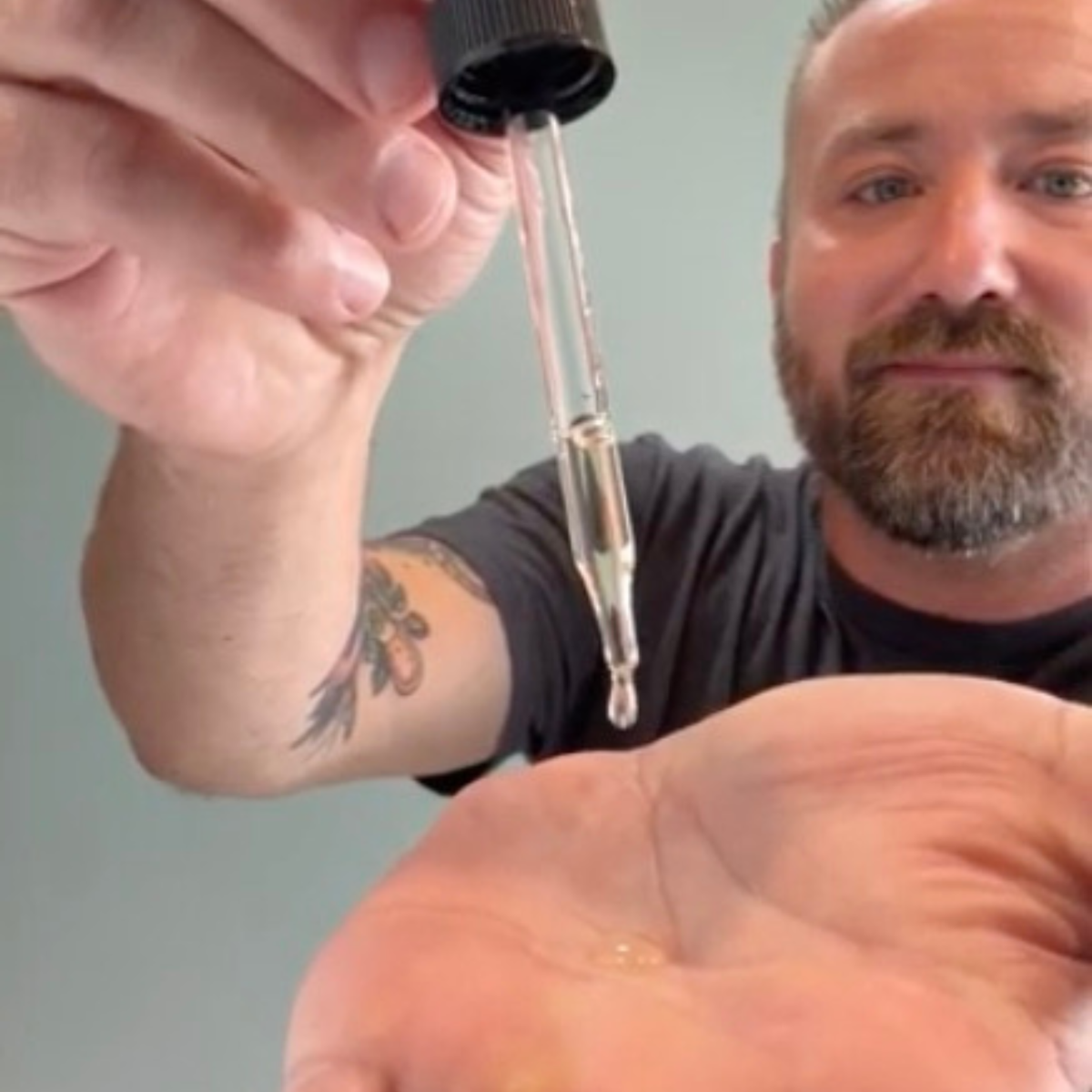
Start with a clean or slightly damp beard. Pour a small amount roughly the size of a pea to a dime — into your palm. Most men use too much product, causing a greasy, weighed-down appearance. Rub the oil between your palms to warm it slightly. Warmth lowers the oil's viscosity, making it spread more evenly. Work it through your beard with your fingertips, starting at the skin underneath your beard and working outward toward the tips. This conditions both your skin and your hair. Use your fingers to comb through your beard as you apply, this distributes the product evenly and prevents clumping.
Testing Your Oil's Absorption Rate
When you first try a new beard oil, test its dry-down time before committing to daily use:
1. Apply your normal amount (a few drops for a full beard) using the technique above.
2. Set a timer.
3. At 5 minutes, touch your beard. It should feel slightly damp but not slick.
4. At 10 minutes, it should feel completely dry with no surface shine.
5. At 15 minutes, your beard should look and feel normal, with no visible residue.
If your beard still looks shiny or feels sticky after 15 minutes, the formula is too heavy for your needs. Reduce the amount you apply by half, or switch to a lighter oil blend.
The Less-Product Rule
The rule is simple: less product, more even distribution. Most men apply 2–3 times what they actually need. Start with 5-8 drops for a full beard, not 10. If your beard looks dry or feels rough after application, add one more drop next time. If it looks greasy, cut the amount in half. Most men find that 5-8 drops total is enough for a full beard, applied once daily.
Key Ingredients to Look For and Avoid
Understanding what goes into your beard oil separates effective products from marketing hype. For sensitive skin, ingredient transparency is non-negotiable.
Carrier Oils and Skin Condition Compatibility
Cold-pressed carrier oils are the foundation. Cold pressing preserves the oil's natural properties without heat damage that can trigger irritation. However, not all cold-pressed oils work equally well for different skin conditions:
- For eczema-prone skin: Jojoba oil is ideal because it mirrors the skin's natural lipid barrier, which is compromised in eczema. Its low oleic acid content (around 10%) won't disrupt the barrier further. Argan oil's higher linoleic acid content (around 35%) also supports barrier repair, making it a strong secondary choice.
- For psoriasis: Castor oil contains ricinoleic acid, which has mild anti-inflammatory properties documented in dermatological literature. Combining castor oil with jojoba creates a blend that both soothes inflammation and supports the skin barrier.
- For seborrheic dermatitis: Grapeseed oil's lightweight profile and low oleic acid prevent the buildup that worsens the condition. Tea tree oil is sometimes recommended for this condition, but sensitive users should approach it cautiously — even "natural" tea tree can trigger contact dermatitis.
Ingredients to Avoid and Why
Avoid products listing "fragrance" or "parfum" as ingredients. These terms hide multiple synthetic compounds, often 50 or more individual chemicals bundled into a single line, that can trigger contact dermatitis.
Natural essential oils are a different story: they're single, identifiable compounds extracted from plants. That doesn't make them risk-free, even natural essential oils can cause reactions in highly sensitive users, but they're generally more predictable than synthetic fragrance blends because you can see exactly what's in the bottle.
Mineral oil, silicones (dimethicone), and parabens are common in cheaper products. None of them belong in a formula designed for sensitive skin.
Beneficial Additives
Vitamin E (tocopherol) is an antioxidant that supports skin barrier health. Look for mixed tocopherols rather than d-alpha tocopherol alone — the mixed form is more stable and less likely to cause irritation.
Hypoallergenic formulations matter, but the label is misleading. A product labeled hypoallergenic has been tested to minimize allergic reactions — but many hypoallergenic products still contain fragrance compounds. Always read the full ingredient list, not just the marketing claim.
Signs of Beard Oil Allergy and How to Test
Even with a carefully selected beard oil, some men experience reactions. Knowing the warning signs helps you catch problems before they worsen.
Common signs of beard oil sensitivity include redness, itching, burning sensation, or a rash along your beard line or cheeks. Swelling or puffiness around the beard area indicates a more serious reaction. Some men experience dry, flaky skin that worsens after applying oil, a sign the product is irritating rather than conditioning your skin.
Patch testing before full application is essential for sensitive skin. Apply a small amount of oil to a discreet area, inside your elbow or behind your ear, and wait 24 to 48 hours. If no irritation develops, it's likely safe for your beard. This step prevents full-face reactions and saves you money on products that don't work for your skin.
Keep a simple log of how your skin responds to different products. Note the date you start using a new oil, any reactions that develop, and how long it takes for irritation to clear. This information helps you identify patterns and avoid problem ingredients in the future.
The Right Beard Oil for Your Routine
Integrating a beard oil into your daily routine doesn't require a complicated process. Simplicity is the point, effective grooming that fits your life, not a chore.
The best beard oil for sensitive skin combines low-comedogenic carrier oils like jojoba and argan, applies in small amounts with proper technique, and absorbs quickly without leaving residue.
MEN STUFF and Sensitive Skin
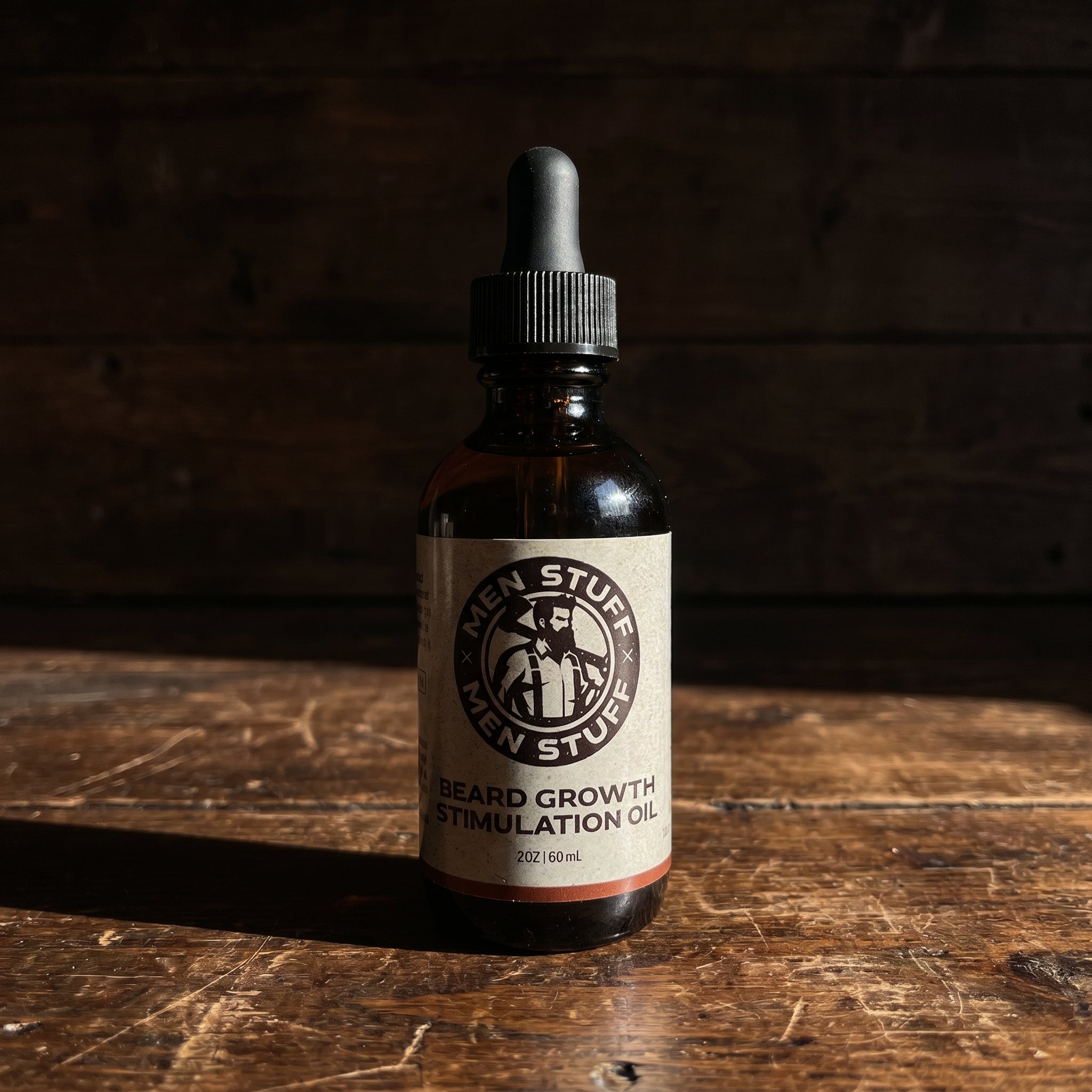
If synthetic fragrance is the problem, our Beard Growth Stimulation Oil is the closest thing to a fragrance-free option in our lineup. Its scent comes entirely from natural rosemary and peppermint essential oils, no synthetic fragrance blend, no hidden compound stack.
Bonus: rosemary and peppermint aren't just there for scent. Both are among the most-studied natural ingredients for supporting hair-growth conditions. So the same ingredients that give the oil its clean, natural scent also do work under the beard.
For most sensitive-skin users looking to cut synthetic fragrance out of their routine, this is where we'd point them first.
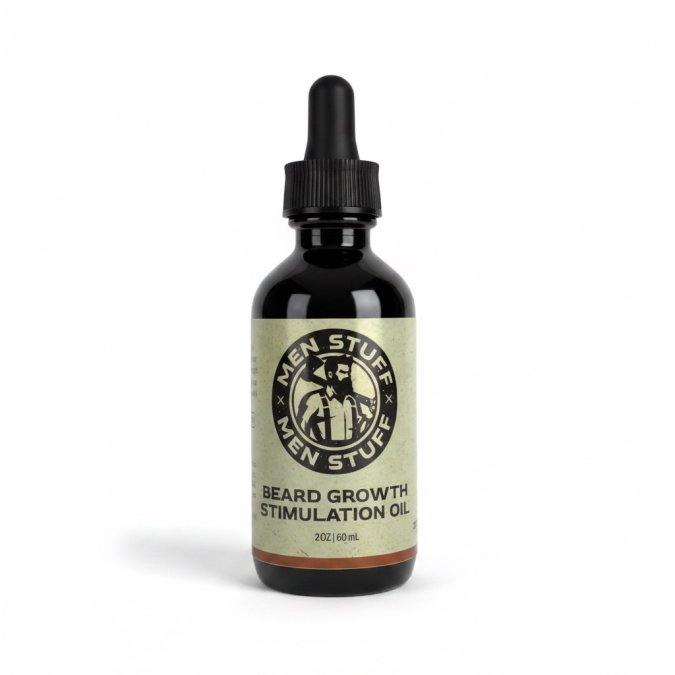
Patch test before full application, even natural essential oils can trigger reactions in highly sensitive users. Follow the 24–48 hour patch test above. If your skin handles it, you've got a fragrance-lighter option that also earns its place in the routine long-term.
Built for daily use.
Frequently Asked Questions
What is a good fragrance-free beard oil that isn't greasy?
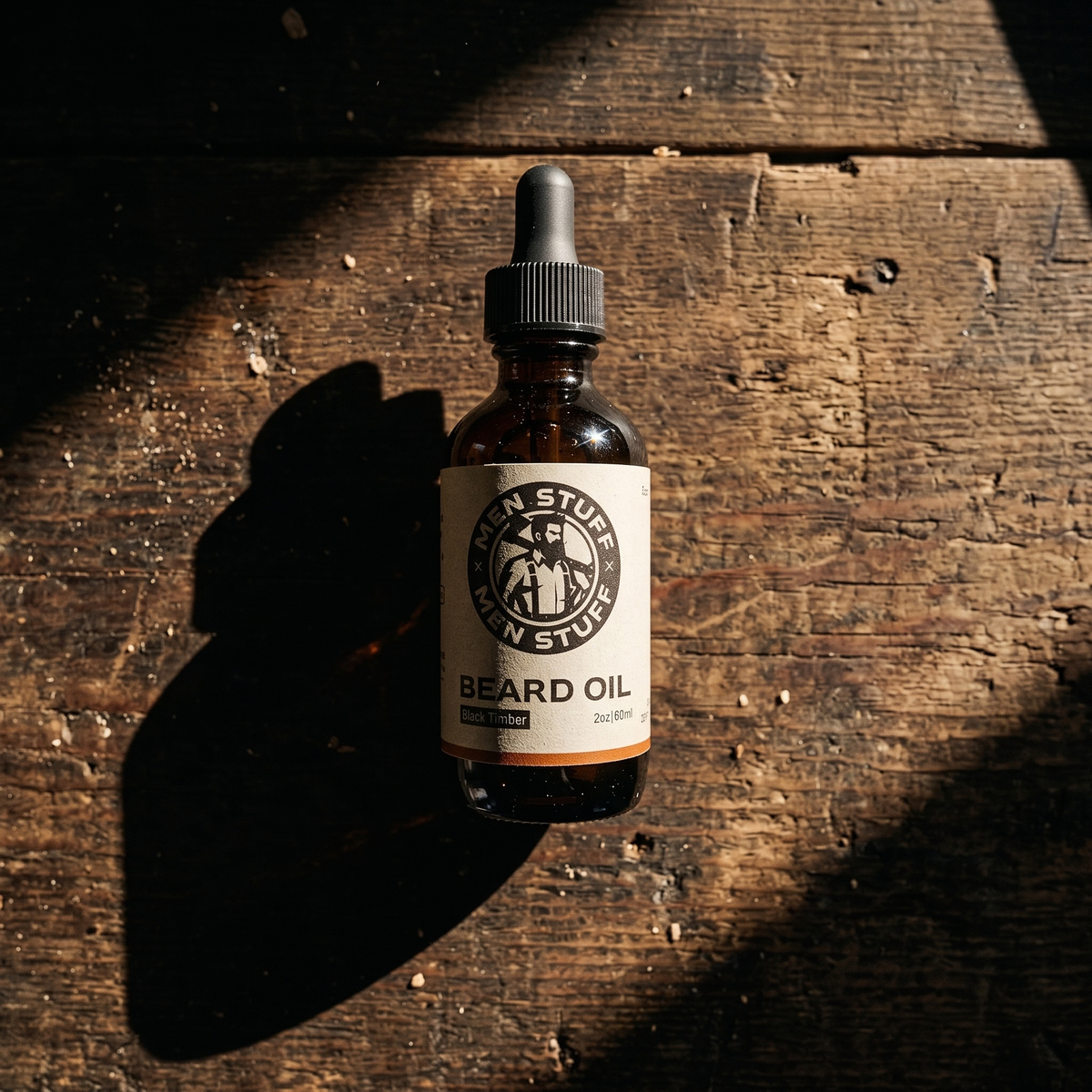
A quality fragrance-free beard oil uses lightweight carrier oils like jojoba, argan, and grape-seed that absorb quickly without leaving residue. Look for formulas with vitamin E and minimal ingredients. Men Stuff's Beard Oil combines argan, jojoba, grape-seed, castor, and coconut oils with vitamin E for a lightweight feel and no greasy buildup. The key is using the right amount, most men need only a few drops daily on clean or slightly damp beard.
How do I know if my beard oil is causing skin irritation?
Signs of beard oil allergy include redness, itching, burning, or flaking that worsens after application. If you notice these reactions, stop use immediately and patch test on a small area of skin first. Wait 24 hours to see if irritation develops. Fragrance-free formulas reduce reaction risk, but even natural carrier oils can cause sensitivity in some individuals.
What type of beard oil is best for sensitive skin?
The best beard oil for sensitive skin uses hypoallergenic, cold-pressed carrier oils without synthetic fragrance or essential oils. Non-comedogenic formulas won't clog pores or worsen acne-prone skin. Look for products that condition both beard and skin without irritants. Fragrance-free options eliminate a major trigger for sensitive reactions. Men Stuff's Beard Oil is designed to calm skin underneath while softening beard hair, making it suitable for sensitive skin types.
Does unscented beard oil work as well as scented versions?
Yes. Unscented beard oil delivers the same conditioning, moisturizing, and itch-reducing benefits as scented versions. The fragrance in traditional beard oils serves only aesthetic purposes, it doesn't improve performance. For sensitive skin, fragrance-free formulas actually work better because they eliminate a common irritant. Quality carrier oils like jojoba and argan provide sebum balance and beard softening regardless of scent. Many men find fragrance-free oils work more effectively because their skin isn't reacting to added fragrances.